
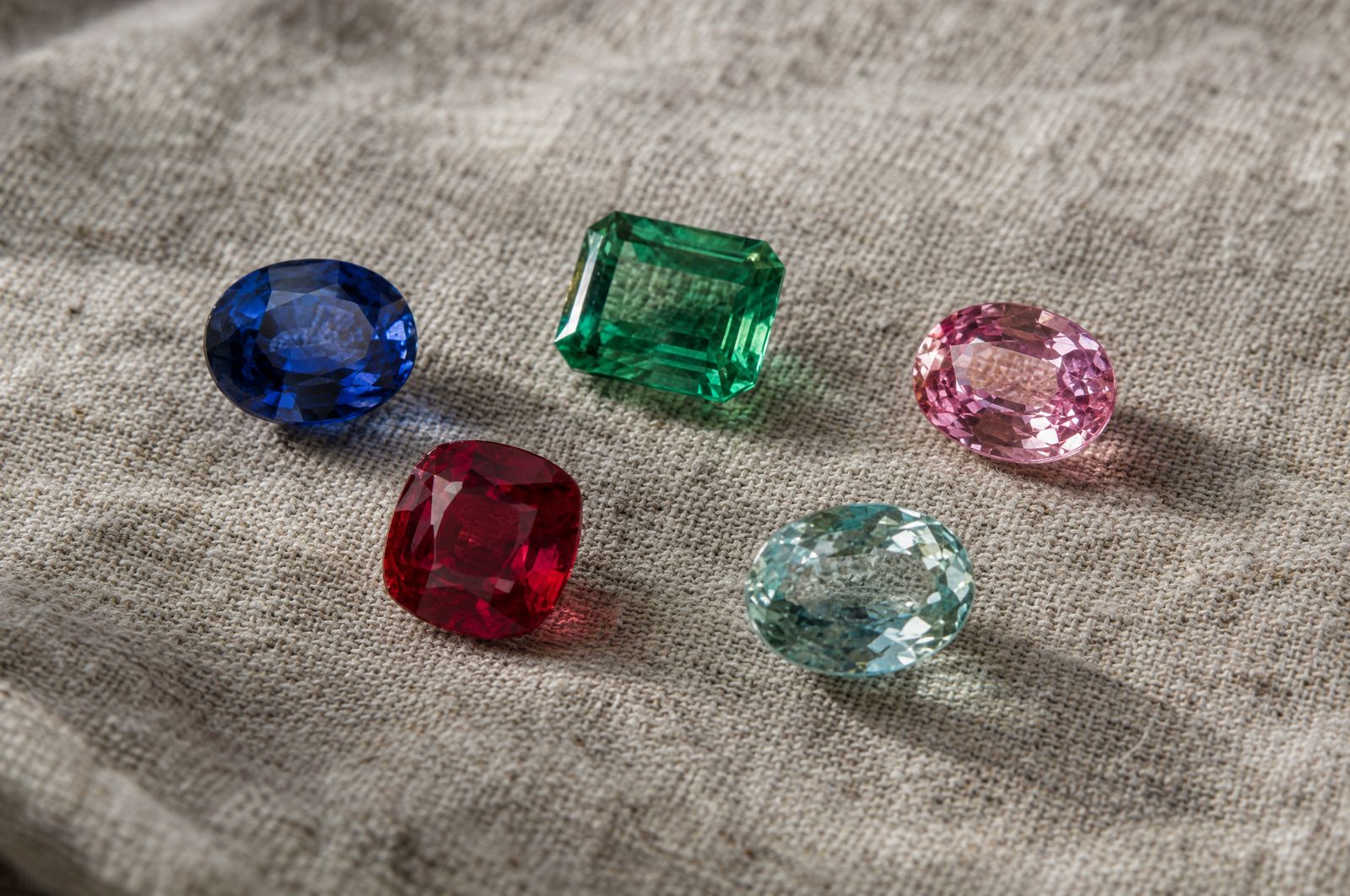
Gemstone engagement rings have moved well past the novelty corner of the jewelry case. Sapphires, rubies, emeralds and a long list of less familiar stones now show up in Denver ring searches next to diamonds. The catch is that an engagement ring is worn every day, through dishes, gym sessions, ski gloves and dry Colorado winters, and many beautiful stones are not built for that.
This guide ranks the common choices by how they hold up, explains treatments in plain terms, and gives you a short list of questions for any seller.
Hardness, toughness and stability are three different things
People use "hard" to mean durable, but gemologists split durability into three parts, and a stone can be strong in one and weak in another.
Hardness: resisting scratches
Measured on the Mohs scale from 1 (talc) to 10 (diamond). Each step means the harder mineral scratches the softer one; the steps are not evenly spaced. The number to remember is 7, the hardness of quartz, which is present in ordinary dust. Stones softer than 7 slowly lose their crisp polish from everyday contact.
Toughness: resisting chips and breaks
Toughness is how well a stone survives a knock. Diamond is the hardest material on the scale yet can chip along its cleavage planes if struck at the wrong angle. Corundum (sapphire and ruby) is notably tough. Emerald is hard enough but often brittle because of its inclusions.
Stability: resisting heat, light and chemicals
Some stones react to sudden temperature changes, strong light or household chemicals. Opal can crack with rapid temperature swings. Pearls dislike acids, perfume and hairspray. Stable stones forgive more of real life.
Rings here meet climbing holds, ski poles, bike grips and snow shovels, plus big swings between a cold trailhead and a warm car. None of that is unique to Denver, but it argues for tough stones and protective settings if the wearer spends weekends outside.
Hardness explorer
What gemstone treatments mean for you
Many colored stones are treated to improve color or clarity. That is normal in the trade. The issues are disclosure, permanence and care.
| Treatment | Common in | What to ask |
|---|---|---|
| Heating | Sapphire, ruby, tanzanite, aquamarine | Generally stable. Ask whether the stone is heated or unheated, since that affects price. |
| Oil or resin filling | Emerald | Ask the degree (minor, moderate, significant). Avoid ultrasonic cleaners and harsh solvents. |
| Glass or lead-glass filling | Some lower-cost rubies | Makes the stone more fragile and sensitive to heat and chemicals. Must be disclosed. |
| Diffusion | Some sapphires | Color may be concentrated near the surface. Recutting can change it. |
For a significant purchase, ask whether the stone comes with a report from an independent gem laboratory that tests for origin and treatment. Our grading report guide covers diamond reports; colored-stone reports work on the same principle: verify the report number with the lab directly.
Buying checklist for a colored-stone ring
- Rate the stone for daily wear: hardness 8 or above is the comfortable zone, 7.5 with a protective setting.
- Ask in writing about treatments and whether they are stable.
- Look at the stone in daylight and indoor light. Some colors shift noticeably.
- Check for windowing, a washed-out patch in the center where light passes straight through.
- Choose a setting that guards corners and edges. The settings guide explains bezels, halos and prong styles.
- Get the stone named correctly on the receipt and appraisal for insurance.
Still weighing a colored stone against a diamond? The lab-grown vs natural guide covers the diamond side of that decision.