
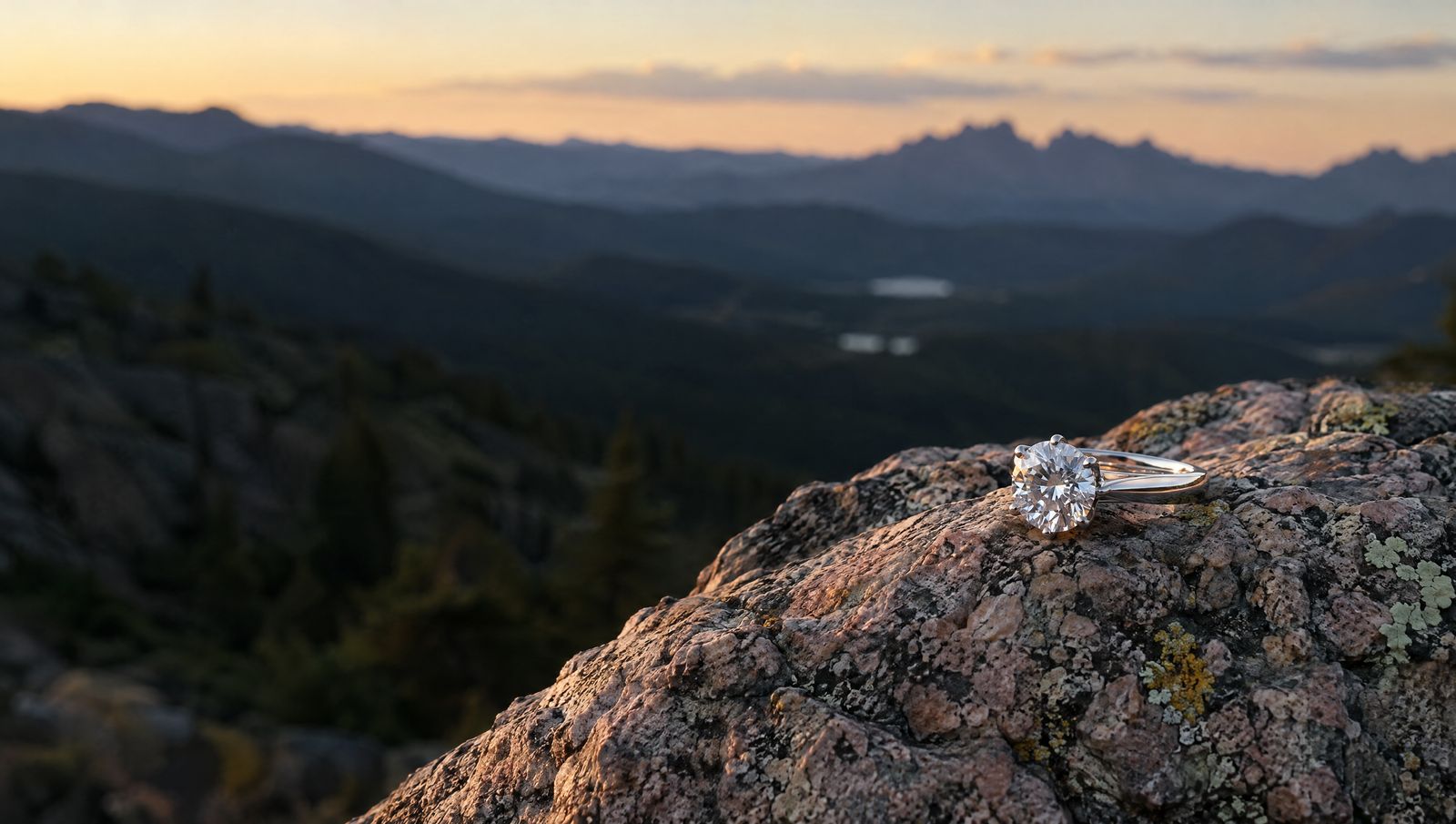
The lab-grown vs natural diamonds question comes up in nearly every Denver engagement ring conversation now, usually with strong opinions attached. This guide skips the opinions. It lays out what is physically identical between the two, what differs, and the questions that help you decide which fits your budget and your values.
What is identical about lab-grown and natural diamonds
A lab-grown diamond is not a lookalike. It is crystallized carbon with the same structure as a mined diamond, so it has the same hardness (10 on the Mohs scale), the same refractive behavior and the same density. Cut by a skilled cutter, it shows the same brightness, fire and sparkle.
In the United States, the Federal Trade Commission's Jewelry Guides allow lab-grown stones to be called diamonds as long as the origin is disclosed clearly, with wording such as "laboratory-grown" or "laboratory-created." What sellers may not do is blur the origin. If a listing just says "diamond" and the price looks remarkably low, ask directly.
Moissanite and cubic zirconia are different materials that imitate diamond. They are fine choices for some people, but they are not lab-grown diamonds and should never be sold as diamonds.
How lab-grown diamonds are made
Two main methods are used. High pressure, high temperature (HPHT) growth recreates the crushing heat and pressure under which natural diamonds formed, crystallizing carbon around a small diamond seed. Chemical vapor deposition (CVD) builds diamond layer by layer from a carbon-rich gas in a vacuum chamber.
Some CVD diamonds receive a post-growth treatment to improve their color. Treatments should be disclosed, and grading reports note them. Read the comments section of the report instead of skimming past it; our 4Cs and grading report guide shows where to look.
What actually differs
Origin and story
A natural diamond formed deep in the earth over a very long span of geologic time and was brought to the surface, mined, sorted and cut. For some couples that history is the point. For others it is irrelevant. Neither reaction is wrong; it is worth knowing which one describes you before you shop.
Price
For the same size and grades, a lab-grown diamond typically costs a fraction of a comparable natural diamond, and lab-grown retail prices have fallen substantially in recent years. Practically, that means a given budget buys a noticeably larger or higher-graded lab-grown stone. This guide does not quote prices because they move quickly; compare current listings with the same grades from the same lab.
Resale and long-term value
Here is the part shoppers skip. Lab-grown diamonds have a thin resale market. Natural diamonds have a more established secondary market, but they also usually sell back for well under what you paid at retail. If resale matters to you, ask any seller what their buy-back or trade-in policy is, in writing, before you buy.
Identification
Telling the two apart requires laboratory instruments. A common thermal diamond tester will pass both. That makes the grading report and the laser inscription on the girdle your main protection, whichever you choose.
Lab-grown vs natural, side by side
| Question | Natural diamond | Lab-grown diamond |
|---|---|---|
| Is it real diamond? | Yes | Yes |
| Daily-wear durability | Hardness 10; can still chip on a hard knock | Same |
| Looks to the eye | Depends on cut, color, clarity | Same |
| Budget for a given size | Higher | Lower |
| Resale prospects | Below retail, but a market exists | Limited |
| Origin questions to ask | Sourcing and chain of custody | Growth method, treatments, energy source |
How to choose between them
Most couples land on an answer faster with three honest questions. First, does the history of a natural stone matter to the person wearing it? Second, would a larger or higher-grade stone at the same price matter more? Third, does either of you care about resale, or is this ring staying in the family regardless?
If origin matters, buy natural and put the money into cut. If visible size within a fixed budget matters, lab-grown is the rational choice. If you are still split, look at a third path: a sapphire or another durable gemstone, covered in the gemstone engagement ring guide.
Mining raises real environmental and labor questions; the Kimberley Process addresses conflict diamonds in the rough trade but has well-known limits. Lab growth avoids mining but uses substantial energy. Treat unqualified labels like "eco-friendly" or "conflict-free" on either side as the start of a question. Ask the seller what the claim is based on.
Whichever you pick, the rest of the ring decisions are the same: the setting and metal, the size, and insurance on the day you take it home.